
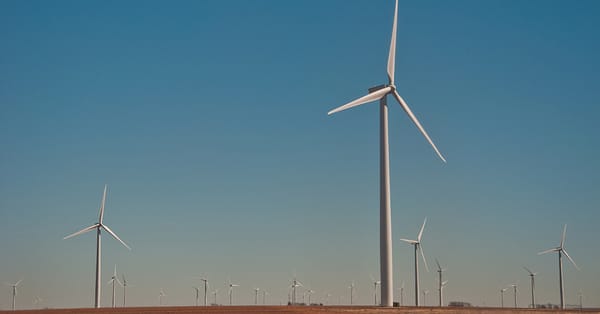
Texas’ wildcatter mindset has resulted in a maximalist — and surprising — expansion of renewable energy resources in a state traditionally associated with oil and gas. Exploring 25 years of U.S. Energy Information Administration (EIA) data, this series traces the Lone Star State’s unexpected transformation into an “all of the above and below” energy powerhouse, where wind power generation has grown dramatically by 26,204.80% since 2000.
Texas produces more wind power than the next three states combined
In 2000, Texas ranked fourth in the U.S. for wind power generation — trailing behind California, Iowa and Minnesota. As animated in the chart, Wind Generation: Texas vs. Top 10 U.S. Wind Producing States, Texas took and held the lead starting in 2006. California’s fall represents a striking subplot: the state that once led the nation in early wind development now ranks seventh.

Source: EIA Electricity Data Browser and Form EIA-860 Generation Data
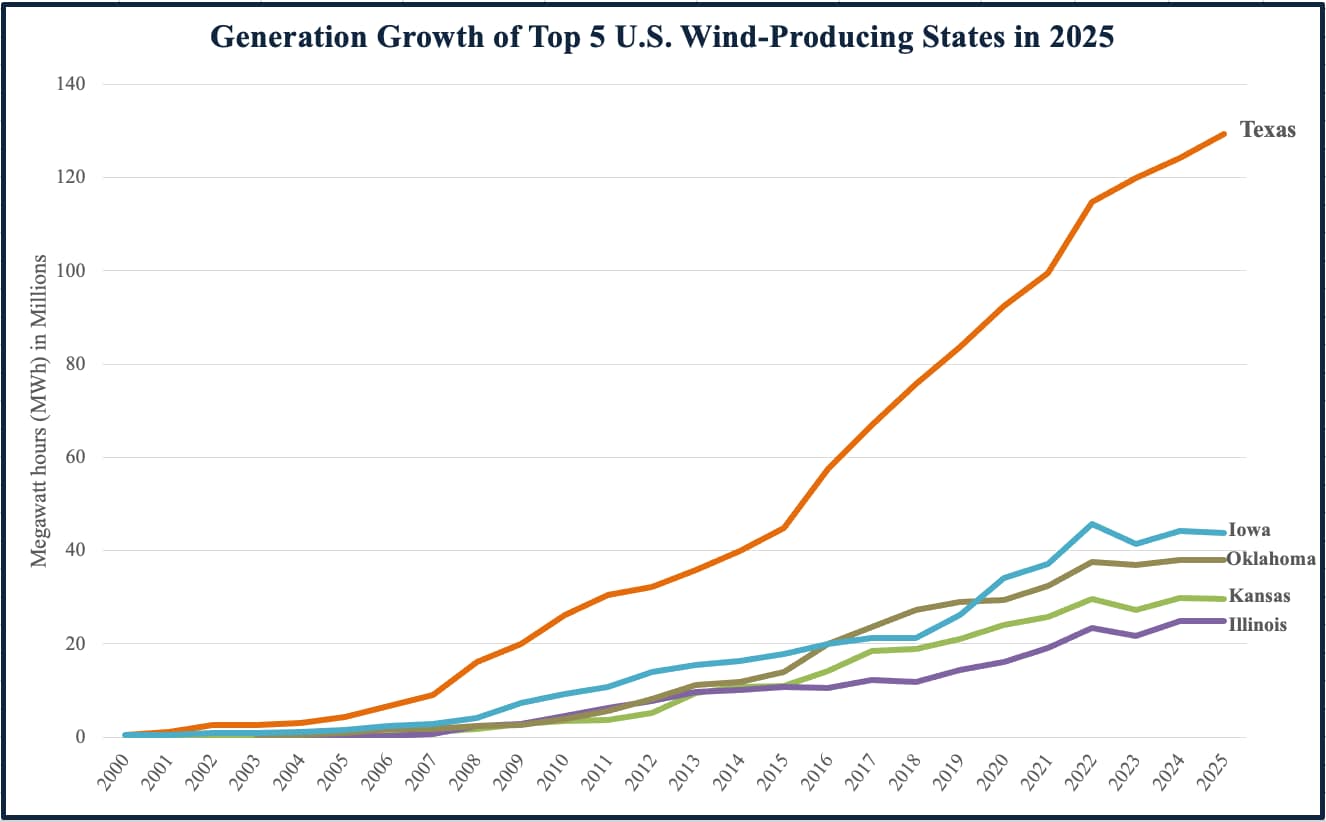
The chart, Generation Growth of Top 5 U.S. Wind-Producing States in 2025, presents another view. Texas produces more wind power than the next three states combined (Iowa, Oklahoma and Kansas) and nearly triple the next largest state (Iowa).
Source: EIA Electricity Data Browser and Form EIA-860 Generation Data
Texas leads overall U.S. wind power growth
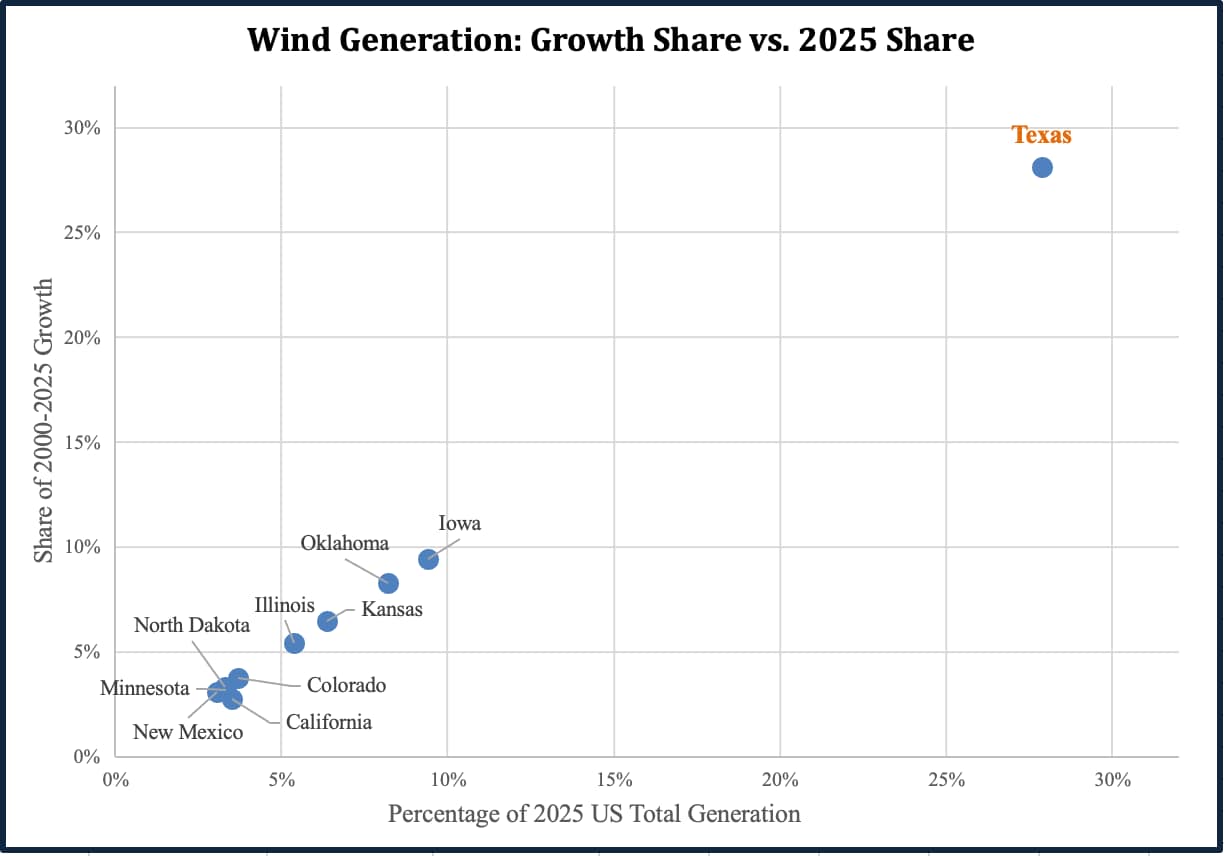
U.S. wind power generation has grown 8,202.69% over the past 25 years. The chart, Wind Generation: Growth Share vs. 2025 Share, illustrates the interaction of two variables for the top 10 U.S. wind-producing states:
- How much a state’s increase in generation contributed to national generation growth during the first quarter of this century, and
- How much that state contributed to total U.S. generation in 2025.
As with oil production, Texas stands in a league all its own: accounting for 27.88% of U.S. wind generation in 2025 while contributing 28.11% of overall U.S. generation growth since 2000.
Source: EIA Electricity Data Browser and Form EIA-860 Generation Data
Wind’s share in ERCOT generation mix has increased
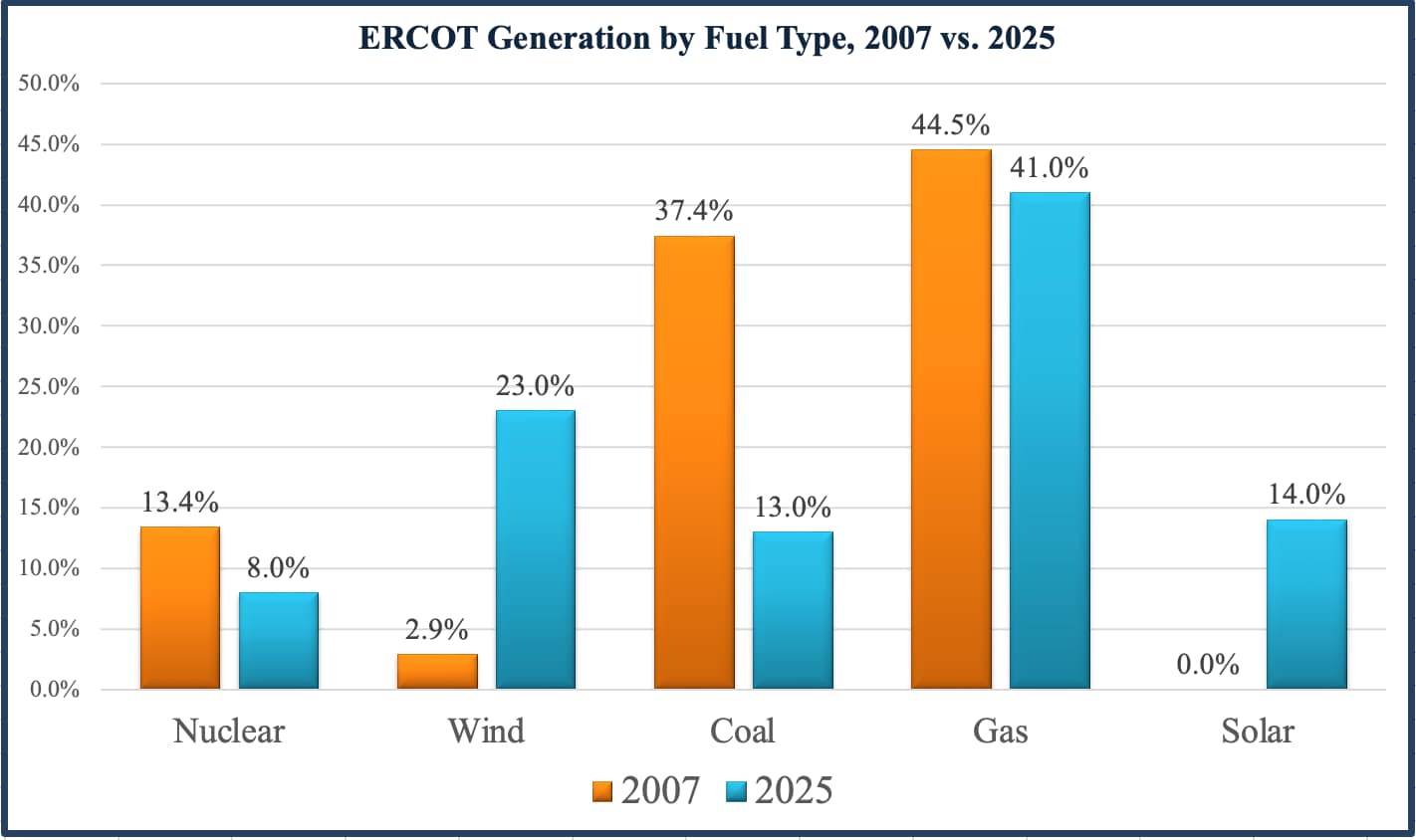
Even though wind serves as a variable source of energy, meaning the wind must be blowing to generate electricity, wind power contributed 23% of ERCOT’s energy resource mix for 2025. Illustrated in the chart, ERCOT Generation by Fuel Type, 2007 vs. 2025, this is up from 2.9% in 2007. The widespread development of energy storage (batteries), which will be explored in another post in this series, helps stabilize the variability of renewables. Nevertheless, gas still contributes the largest percentage of energy generation at ERCOT while working to ensure reliable, consistent electric service.
 Source: ERCOT Fuel Mix Report for 2007-2024, ERCOT Fuel Mix Report for 2025
Wind energy is not immune from supply chain challenges
Like other energy sectors, the wind industry faces supply chain issues. In 2022, the U.S. Department of Energy released a report stating U.S. competitiveness is declining for key wind turbine components. Rising energy demand begs more energy from all sources, and wind functions as one of several key ingredients in Texas’ energy mix. As such, policymakers at the state level could consider efforts to bolster domestic supply chains, generating more key energy and electricity infrastructure manufacturing in Texas.
